
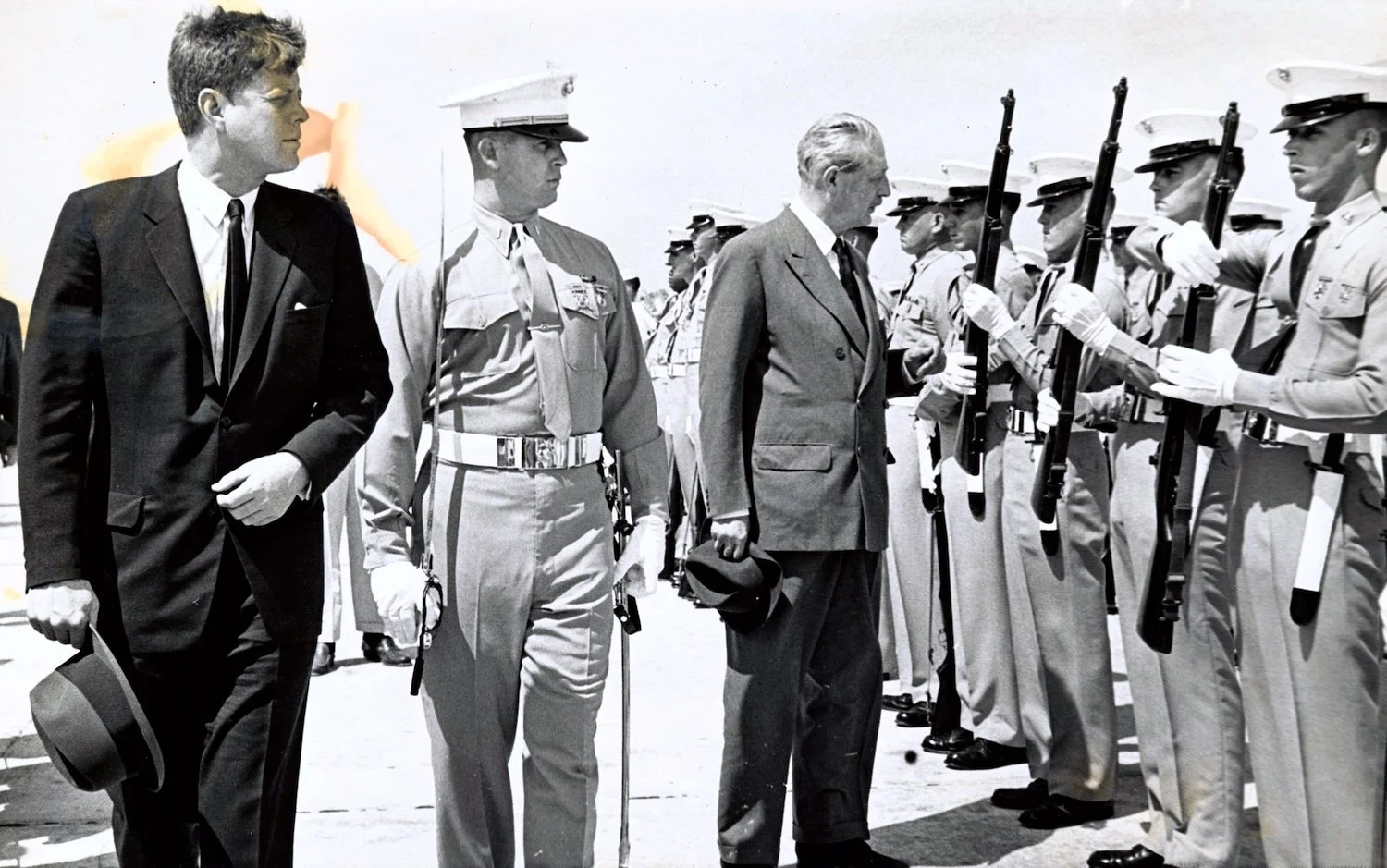
Long before Dallas, the Florida Keys were at the center of JFK's Cold War. President Kennedy and British Prime Minister Harold Macmillan inspect the Marine Guard in the Keys on March 27, 1961. (Florida Keys History Center, Ida Woodward Barron Collection)
People see the title of my book, How Key West Killed JFK, and laugh. I've been told it sounds like a Carl Hiaasen novel. I get it. But this isn't a joke. It's dead serious.
The truth is, JFK wasn't even on my mind when I started all this. I was looking into the disappearance of Key West's notorious drug-dealing fire chief, Joseph “Bum” Farto, when I found an intelligence report in the JFK Assassination Files about Jack Ruby selling guns from a hotel room in Islamorada. Jack Ruby? The man who shot Lee Harvey Oswald? It seemed impossible.
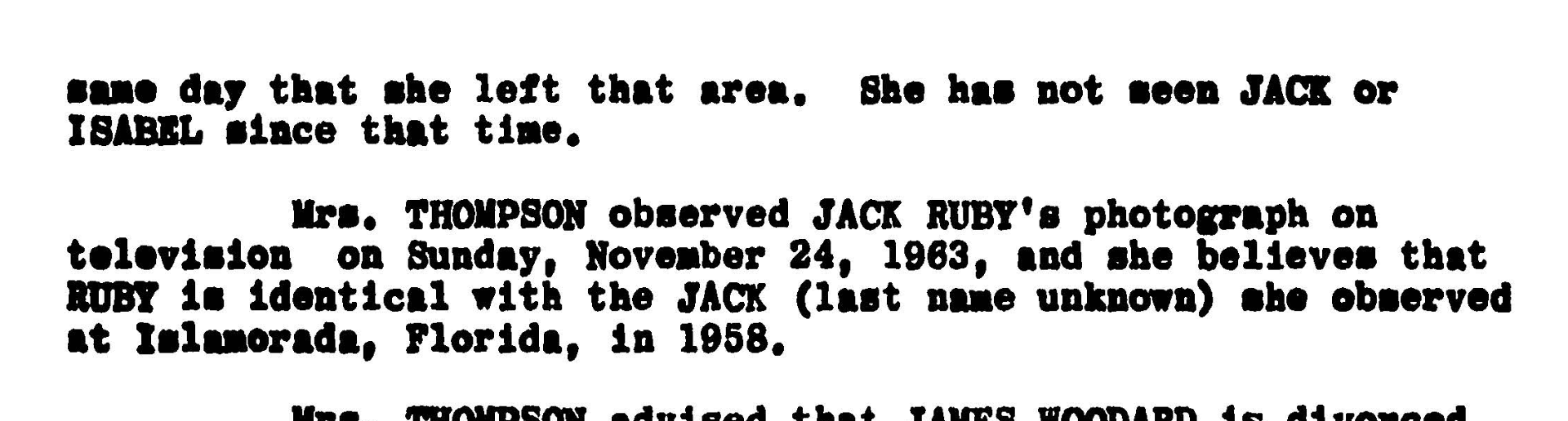
Jack Ruby in the Florida Keys? This declassified file records Mrs. Thompson’s account of recognizing Ruby on TV as the same man she saw running guns in Islamorada, Florida, in 1958.
Later, I came across another report saying Oswald had refueled his boat at the Toppino’s in Marathon Shores, and again at the Standard Oil docks on Stock Island. I still had my doubts. But then I discovered a declassified report about George Faraldo, the former director of the Key West airport, who said he saw Lee Harvey Oswald and Jack Ruby together at the Key West airport before Kennedy was killed. He also said he had taken their photograph.
Faraldo had passed away, but his wife Norma was still alive. So I called her.
"Do you know what the JFK Assassination Files say about your husband?" I asked.
"Yes," she said. "It's all true."
Then she told me she still had the photograph somewhere.
That got my attention. Whether that photograph will ever surface is a story of its own—but now I had confirmation from someone who had lived through these events. The conversation with Norma left me with no doubt that the reports were true, so I jumped headfirst into the rabbit hole.
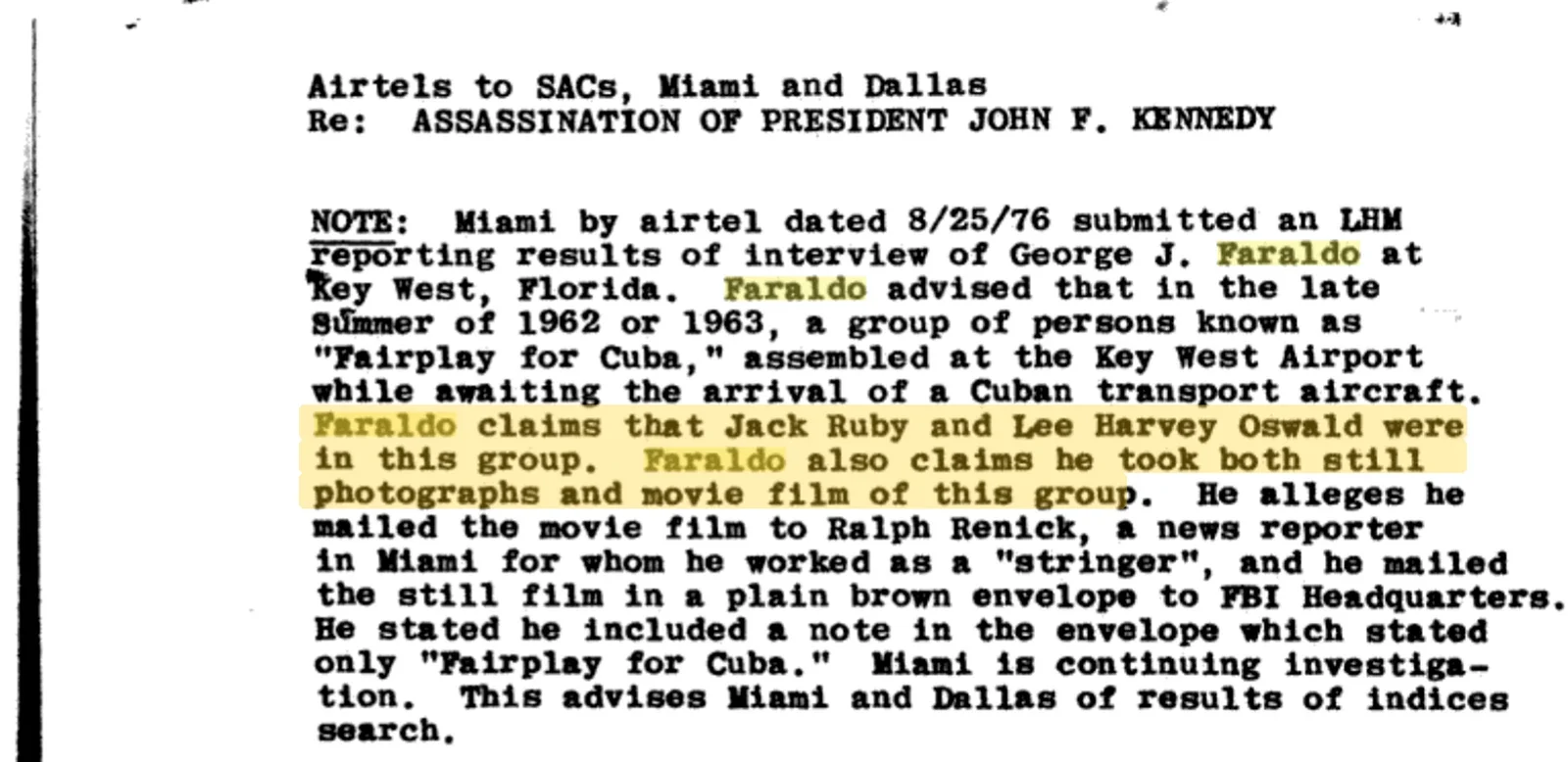
In black and white (and yellow): A declassified FBI airtel documenting former Key West Airport Director George J. Faraldo’s claim that he saw—and photographed—Lee Harvey Oswald and Jack Ruby together at the Key West Airport.
I grew up less than 15 miles from Dealey Plaza in Dallas, where President Kennedy was killed on November 22, 1963. I even bought school supplies from the Sun Rexall Drug Store where Marina Oswald worked after the tragic events in Dallas. But I was never obsessed with the Kennedy assassination. My real passion is Key West and uncovering the hidden history of the Florida Keys.
Kennedy, Oswald, and Ruby just happened to fall into that orbit. I kept digging, and things only got stranger.
It doesn't matter to me who you believe killed JFK—Oswald, the Mafia, Castro, the CIA, or even his limo driver. Almost everyone who's ever been suspected of killing the president has a link to the Florida Keys: Oswald, Ruby, Castro, Santo Trafficante, Johnny Roselli … the list goes on.
We probably agree that a lot of JFK researchers are a bit out there. I never wanted to be one of them. My goal was to write about the overlooked role the Florida Keys played in the Kennedy politics during the Cold War. Stories about the Mafia, secret CIA bases, gunrunning, drugs, politics, and corruption that turned our small islands into a center of international intrigue just 90 miles from Cuba.
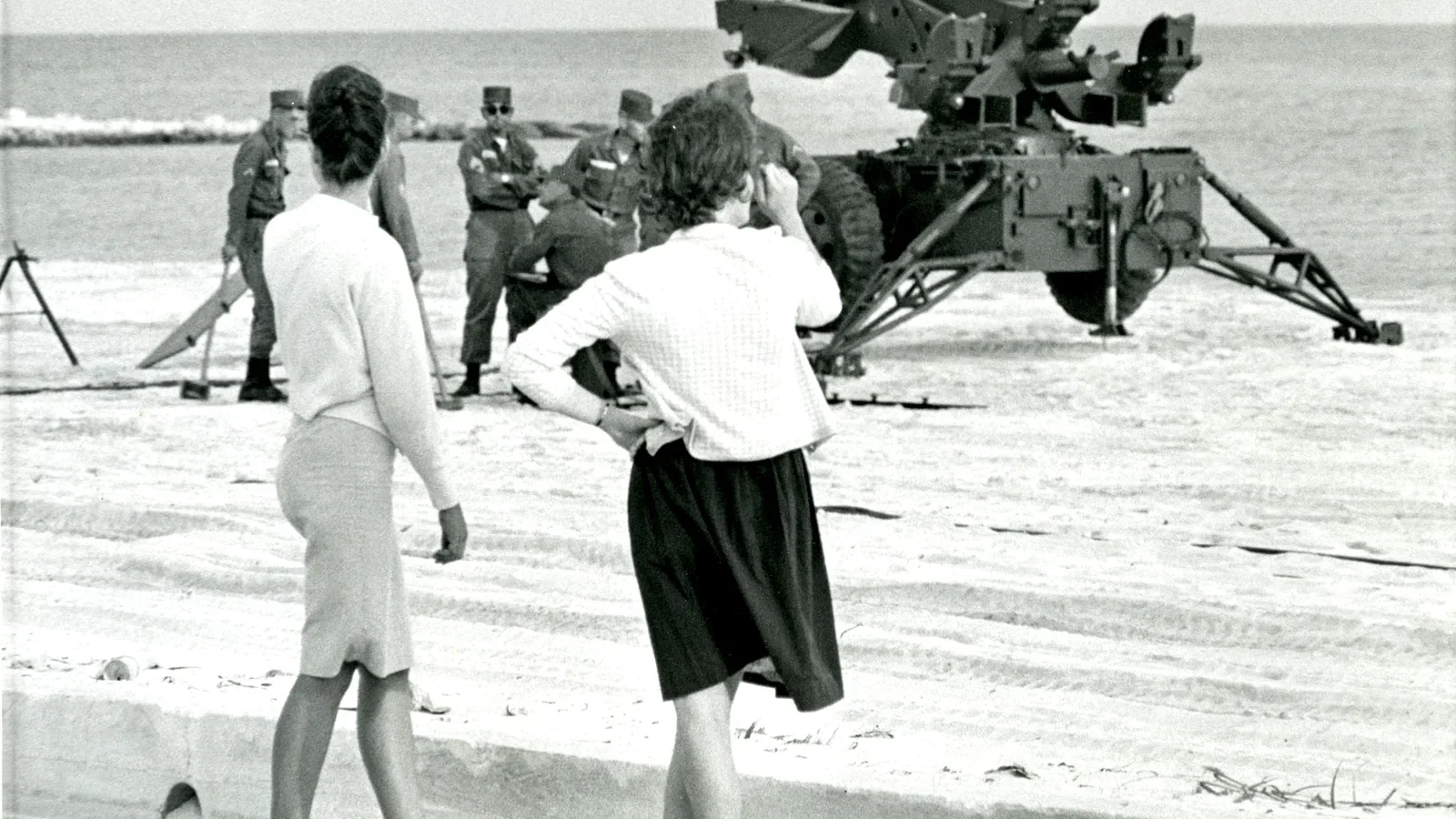
Front-row seats to the Cold War: Two beachgoers watch military personnel and a HAWK missile launcher on Smathers Beach in Key West, 1962. (Florida Keys History Center, Wright Langley Collection)
That alone was enough material for a great book for tourists to read on the beach.
Then I discovered Gilberto Policarpo Lopez.
Lopez was a baker from Cuba who had worked in Key West. His name showed up in government documents as a possible suspect in the Kennedy assassination. He had dozens of parallels to Lee Harvey Oswald, and he crossed the border from Texas to Mexico shortly after the assassination, then flew to Cuba, where he seemed to vanish from history.
I became fascinated by him and his Key West connections. I even started planning a trip to Cuba to try to find him.
Then, with help from my friend Cheryl Sanchez-Simmons, I found something generations of JFK researchers missed. Gilberto Policarpo Lopez had somehow come back to the United States undetected. He lived in South Florida for decades before he died in 2021. But this wasn’t a dead end. Gilberto had a family.
I connected with his daughter Lis and his former brother-in-law, Cookie Machin. The stories they told me filled in over 60 years of missing history, including shocking details that had never shown up in government reports.
For years, researchers had only one photo of Lopez, in which he wore sunglasses that obscured his face. During my investigation, I located his passport photo, and for the first time, people could actually see the face of this JFK assassination suspect.
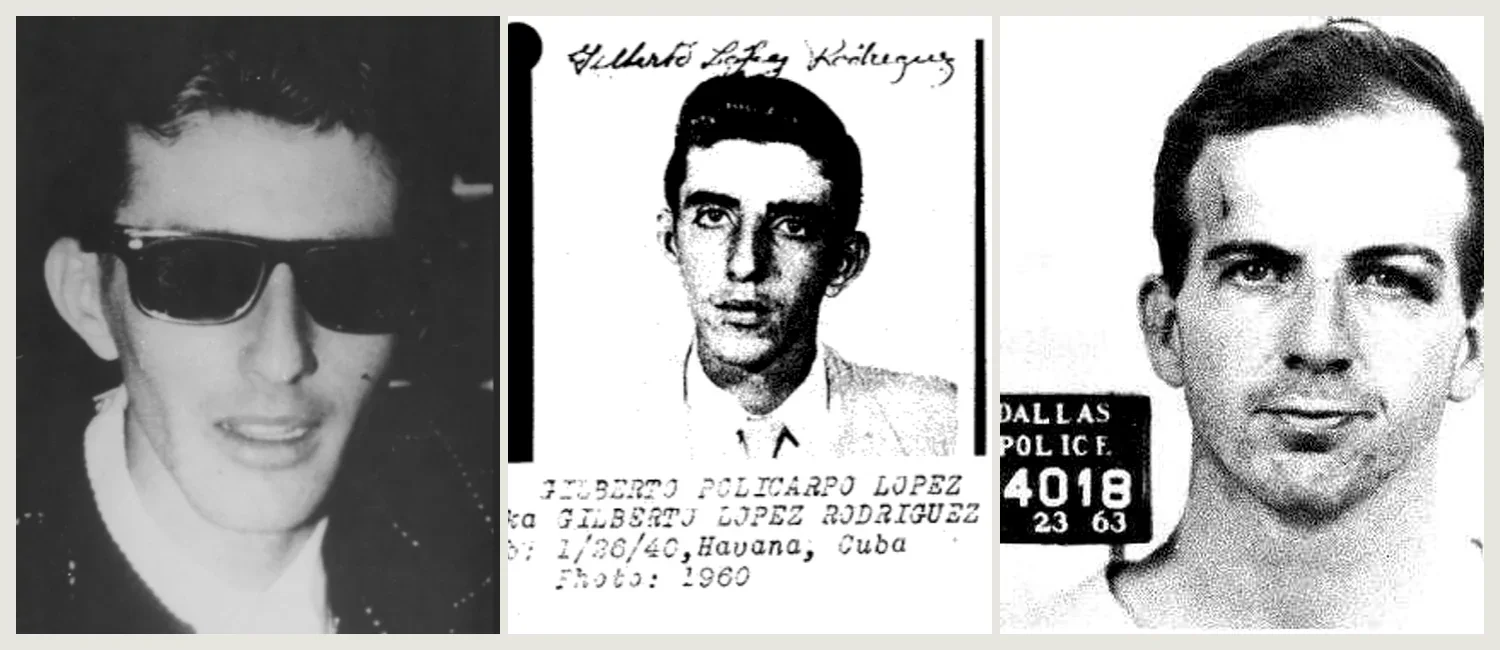
Putting a face to a 60-year-old mystery. From left: the only previously known photo of JFK suspect Gilberto Policarpo Lopez, his newly uncovered passport photo, and Lee Harvey Oswald, whose trail around November 1963 closely mirrored Lopez’s.
This discovery and the new details could prove to be some of the most important new information about the assassination in years.
Sixty-three years ago today, President Kennedy was killed in Dallas. I won’t claim to know who did it. But I have one hell of a story to tell, and there’s a good chance you’ll never look at Key West or the JFK assassination the same way again.
That's a taste of How Key West Killed JFK: The Island That Changed the Course of History came to be.
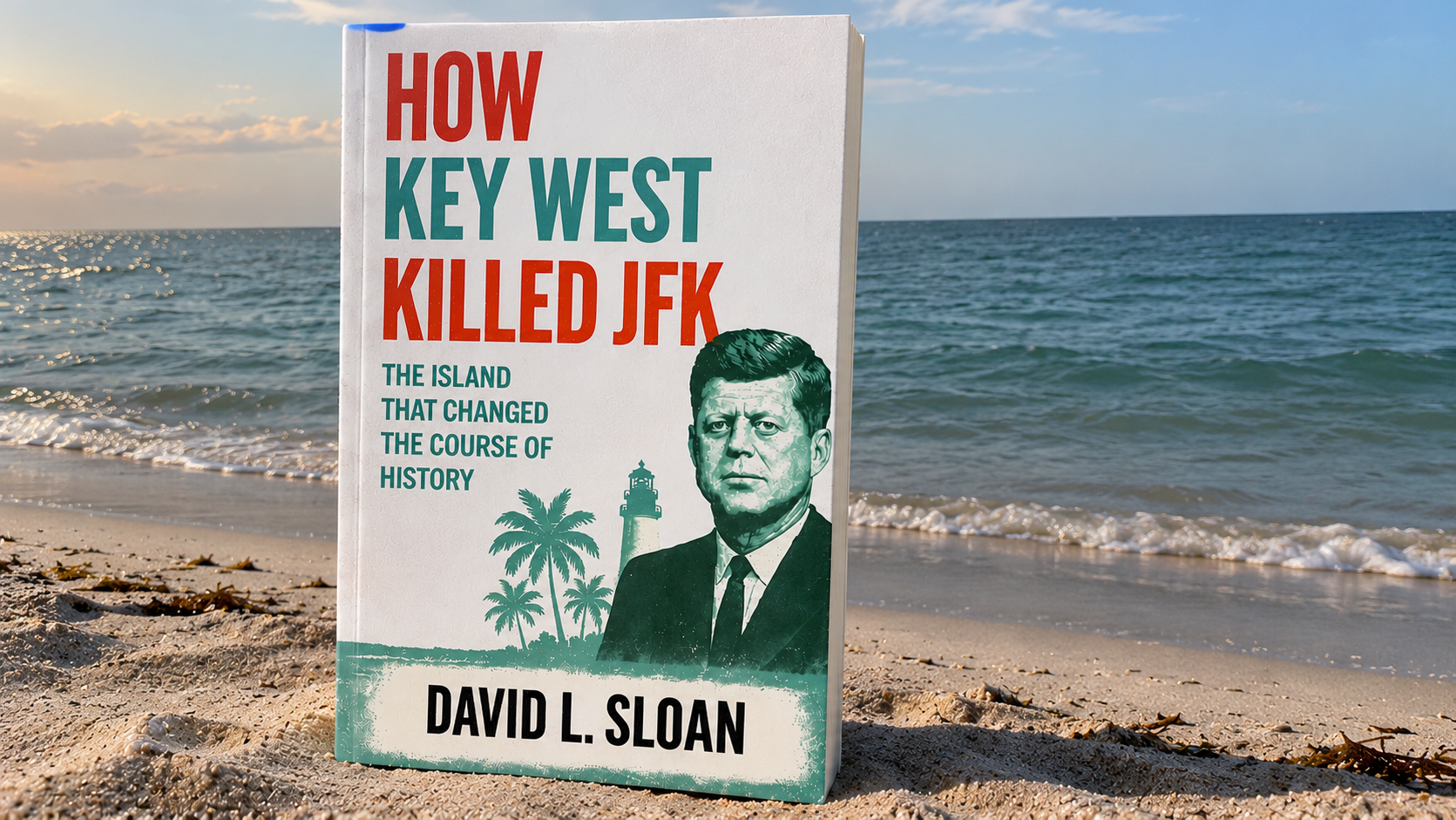
Declassified files, Cold War intrigue, and newly uncovered photographs from 90 miles off Cuba's coast. How Key West Killed JFK: The Island That Changed the Course of History.
Want to know more about the fascinating connections between Key West and the JFK assassination? Get the whole story in How Key West Killed JFK: The Island That Changed the Course of History, available on Amazon. Limited autographed copies available at sloanskeywest.com
David Sloan is the author of more than 20 books about Key West and the Florida Keys.
